Thursday, August 14, 2008

Highlights from our interview with Liz Curtis Higgs

Regarding Sommerled:
Alas and alak, I can think of many men in my life who have been like Sommerled so I didn’t have to reach too far to find an example. Sadly, they’re out there and most of us have dated one…But I should never have made him a musician; because nothing would win my heart like a guy who could play a cello well. And…he just won my heart! So then I had to kill him! And it’s like “Oh no! This is terrible!” You know because we’ve got him all turned around, made him believable. But of course the brothers weren’t in on all this turnaround. They just came in and did the dirty.
They must not have the same love for cellos as you do.
I think you’re right. Yeah, they didn’t. They didn’t actually get to hear him play cello. Only fiddle. Maybe that was the whole problem.

Choosing a mute heroine:
Now, you can tell I’m a very verbose person. It’s amazing I can be disciplined to write at all because I’d much rather talk. So imagine now a woman like me, a chatty Kathy, having as your lead heroine a girl who can’t talk. It was…scary! Originally I was going to get her back her voice. I had real clever ploy of how the brothers were going to seek grace from her by bringing home a professor from the University of Attenborough who was the first to invent the use of anesthesia. So he would come and do this iffy surgery on her throat, and “tada!” She would get her voice back. And it seemed very clever indeed, but the more I thought about it, the hokier it got. And, you just have to be so careful of that kind of thing. So I decided not to have that element in the book, and not to have this hokey “get your voice back” thing.

Traveling:
I am not as fun to travel with as you may think because I’m doing research the whole time. So I’m interviewing people. I’m hanging out in graveyards. I’m climbing through libraries. And things that aren’t quite so exciting.
That all sounds pretty exciting to me!
Well I have a good time, yeah. And all those men in kilts make it all worth while.

My husband has said, “Honey, don’t even think about starting a new series in France!” ‘Cause he knows me well enough, he knows that I’d have to go there several times. I’d have to do tons of research…actually that sounds like a really good idea. Yeah, then we’ll do a series in…I don’t know…Italy would be good. Not all novelists travel to the place once, let alone ten times. But I love it, and I’ve got lots of extra frequent flier miles and that’s the best way to spend them!

Writing Grace in Thine Eyes:
My initial thought is that the grace would be extended to Davina. Well, then I get into the writing of the book and I realized she’s a complete innocent so the direction grace needs to flow is not to Davina, it’s from Davina. The first draft that I wrote, I had her truly fall in love with, and express love to, Sommerled. And that was all well and good and fine, except that I realized that’s not the biggest gift she could give him. To love a man who has hurt you, sadly, is easily done. [Laughs] It’s just unfortunate that sometimes we love a man who is not good to us. I dated an abuser back when I was 19 so I know how this works. But to extend forgiveness to him is huge, and frankly, more difficult than love because it goes to a deeper, more sacrificial level. And of course it’s past anything physical, it’s at the spiritual level. In many ways the entire theme was turned on its head by the time I was done, and I love that. Although it requires a huge amount of re-writing, it’s so exciting when you as the writer learn something in the writing. You know, when you’re taught and you are stretched.

It was a very difficult book to write. It took 14 months. My books never take that long, but that one did. Partly because of the re-writing, but also because I could climb in Davina’s shoes having been right where she was. It was the front seat of a car, not a stable, but it was the same story. And so I was in her heart, and that was very painful to travel through again. Then I had to be in Leanna’s heart. And I am a mother, at the time of a 17-year-old daughter, and so I imagined “How would I feel as a mother if my daughter came to me and said this happened to me.” What would that be like?

So much tears and gnashing of teeth. I mean, I must have lost a pound in just water with this book. You know people say to me, “Oh I really wept reading your book.” It’s like, wow, you have no idea. I just soaked the keyboard. I’m lucky I didn’t electrocute myself. But hopefully that’s what makes a book connect with a reader. You don’t have to cry. Not everybody cries when they read. But I have to. You know in other words, if I’m not that involved how could I ever expect my reader to be?

Why she reads/writes fiction:
But most of the time, 99% of the time, people get something really meaningful [out of my books] that I didn’t put in there intentionally, that maybe isn’t even exactly there in an overt way, but it works through the process of their own heart. You know it’s a combination of their own experiences, of the Holy Spirit kind of working through them, and then this little story. And it always amazes me, and delights me. And it’s why I read fiction. I mean, I inhale fiction. And it’s to travel to a different place and think a different thought.

Breaking rules:
You are never supposed to have a character that’s mute. You are never supposed to have music or a musician as part of a book, because it’s oral and here you are on a flat page of words. So they say never have a character be a musician, and never have her be an artist. [Laughs] It’s just funny because, I of course am a bit of a rebel who thinks rules are there to be broken, but it does make a challenge. What can I say? I hope it worked.

Using Quotes:
Yes I love the epigraphs. I get really carried away. I spend a ridiculous amount of time trying to find just the right one. Sometimes I’ll choose one, write the chapter, decide it’s not quite perfect, and so spend another hour trying to find a different one. I’ll save the one I didn’t use for another chapter. So, yes, after all these books, I have a crazy collection.
Do you have any favorite quotes that you’re just like, “jones”ing to use, that you just haven’t written the right chapter for yet?
Well here’s one. I’d like to find a home for this. This is by James Thomson who was a 18th century Scottish poet: “The whole air whitens with the boundless tide of silver radiance trembling round the world.” Isn’t that delicious? You know it’s like, surely there’s going to be a use for that one.

Sharing our feelings about Jamie:
I found myself exactly as frustrated as you were about Jamie and the sons. I just wanted to say, “Come on dad! If can be this loving over here, what’s the problem over there.” But the truth is, I’m a mother…I’ve told you of course six times now of a 17-year-old daughter, now 19, and a son whose now 21, and I’m just trying to think if my son had caused an accident, had something like that happened to my Lily that took her voice away, could I absolutely forgive him and not in any way have that hanging over my relationship with him? I don’t have an answer for you. I hope. I hope that I could.

Sadly, there are lots of Jamie’s out there. Who, one thing goes wrong and they never can get over it. They, you know, grace is extended to them but they can’t seem to come up with a way to extend it back. It’s heartbreaking to see but it happens. Sometimes there are just people who are just hungry for grace, they’re going to sop it all up around them, but they’re not willing to turn around and give it to other people.

Sharing our feelings about Graham:
I think Graham is closer to a true hero in this book. I would love to write a book with just Graham. He’s a very special guy. I like him a lot.

Closing words:
It’s been absolutely a delight. Hugs to all and thanks!

Wednesday, July 9, 2008

July's Meeting

Call it summer, call it a busy month, call it a “non-girly” read….we had a small gathering of Paige Turners this month. (And when all was tallied up, only two of the girls had read the whole book.) But never fear, cliff notes / synopsis / skim reading came through and we had a good discussion anyway.

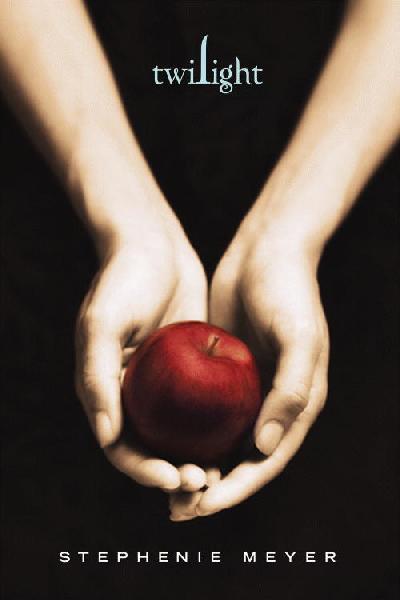
Part of the discussion centered on another vampire series by an author named Stephanie Meyer. If Bram Stoker’s style didn’t suit your fancy, we highly recommend this series: Twilight, New Moon, Eclipse, and Breaking Dawn (coming August 2nd). If you *did* enjoy your taste of Dracula, I would recommend that you also pick up The Historian by Elizabeth Kostova.

Despite our attendance, food was in abundance. Sarah brought an amazing fondue fruit tray…thank you! So we chatted, and ate, and just hung out. We also watched “Down with Love” and played Beyond Balderdash. (Speaking of which, Sarah is a very convincing liar! It’s amazing what you can find out at book club!)

Let’s hope our schedules cooperate with us this next month because our book for August is “Grace in Thine Eyes” by Liz Curtis Higgs. Liz will be joining our meeting via conference call, which is pretty nifty. So pick up this novel, soak up the sun, and enjoy some leisurely summer reading.

Wednesday, June 25, 2008

Dracula: Food for Thought

I found the following on http://www.sparknotes.com/ I thought it might be good to get our literary juices running.

Themes: Themes are the fundamental and often universal ideas explored in a literary work.

The Consequences of Modernity
Early in the novel, as Harker becomes uncomfortable with his lodgings and his host at Castle Dracula, he notes that “unless my senses deceive me, the old centuries had, and have, powers of their own which mere ‘modernity’ cannot kill.” Here, Harker voices one of the central concerns of the Victorian era. The end of the nineteenth century brought drastic developments that forced English society to question the systems of belief that had governed it for centuries.

When Lucy falls victim to Dracula’s spell, neither Mina nor Dr. Seward—both devotees of modern advancements—are equipped even to guess at the cause of Lucy’s predicament. Only Van Helsing, whose facility with modern medical techniques is tempered with open-mindedness about ancient legends and non-Western folk remedies, comes close to understanding Lucy’s affliction.

In Chapter XVII, when Van Helsing warns Seward that “to rid the earth of this terrible monster we must have all the knowledge and all the help which we can get,” he literally means all the knowledge. Van Helsing works not only to understand modern Western methods, but to incorporate the ancient and foreign schools of thought that the modern West dismisses. “It is the fault of our science,” he says, “that it wants to explain all; and if it explain not, then it says there is nothing to explain.” Here, Van Helsing points to the dire consequences of subscribing only to contemporary currents of thought. Without an understanding of history—indeed, without different understandings of history—the world is left terribly vulnerable when history inevitably repeats itself.

The Threat of Female Sexual Expression
Most critics agree that Dracula is, as much as anything else, a novel that indulges the Victorian male imagination, particularly regarding the topic of female sexuality. In Victorian England, women’s sexual behavior was dictated by society’s extremely rigid expectations. A Victorian woman effectively had only two options: she was either a virgin—a model of purity and innocence—or else she was a wife and mother. If she was neither of these, she was considered a whore, and thus of no consequence to society.

By the time Dracula lands in England and begins to work his evil magic on Lucy Westenra, we understand that the impending battle between good and evil will hinge upon female sexuality. Both Lucy and Mina are less like real people than two-dimensional embodiments of virtues that have, over the ages, been coded as female. Both women are chaste, pure, innocent of the world’s evils, and devoted to their men. But Dracula threatens to turn the two women into their opposites, into women noted for their voluptuousness—a word Stoker turns to again and again—and unapologetically open sexual desire.

Dracula succeeds in transforming Lucy, and once she becomes a raving vampire vixen, Van Helsing’s men see no other option than to destroy her, in order to return her to a purer, more socially respectable state. After Lucy’s transformation, the men keep a careful eye on Mina, worried they will lose yet another model of Victorian womanhood to the dark side. The men are so intensely invested in the women’s sexual behavior because they are afraid of associating with the socially scorned. In fact, the men fear for nothing less than their own safety. Late in the novel, Dracula mocks Van Helsing’s crew, saying, “Your girls that you all love are mine already; and through them you and others shall yet be mine.” Here, the count voices a male fantasy that has existed since Adam and Eve were turned out of Eden: namely, that women’s ungovernable desires leave men poised for a costly fall from grace.

The Promise of Christian Salvation
The folk legends and traditions Van Helsing draws upon suggest that the most effective weapons in combating supernatural evil are symbols of unearthly good. Indeed, in the fight against Dracula, these symbols of good take the form of the icons of Christian faith, such as the crucifix. The novel is so invested in the strength and power of these Christian symbols that it reads, at times, like a propagandistic Christian promise of salvation.

Dracula, practically as old as religion itself, stands as a satanic figure, most obviously in his appearance—pointed ears, fangs, and flaming eyes—but also in his consumption of blood. Dracula’s bloodthirstiness is a perversion of Christian ritual, as it extends his physical life but cuts him off from any form of spiritual existence. Those who fall under the count’s spell, including Lucy Westenra and the three “weird sisters,” find themselves cursed with physical life that is eternal but soulless. Stoker takes pains to emphasize the consequences of these women’s destruction.

Though they have preyed on helpless children and have sought to bring others into their awful brood, each of the women meets a death that conforms to the Christian promise of salvation. The undead Lucy, for instance, is transformed by her second death into a vision of “unequalled sweetness and purity,” and her soul is returned to her, as is a “holy calm” that “was to reign for ever.” Even the face of Dracula himself assumes “a look of peace, such as [Mina] never could have imagined might have rested there.” Stoker presents a particularly liberal vision of salvation in his implication that the saved need not necessarily be believers. In Dracula, all of the dead are granted the unparalleled peace of salvation—only the “Un-Dead” are barred from it.

Thursday, June 19, 2008

Thunder can't cramp our style!

Although...it can cause us to change locations. After a lovely meal outside, we took our party to the living room for movie time. Thank you to everyone who cooked and brought goodies to add to the feast. It was really nice to see everyone crowded around the table just eating and sharing.


We'll definitely have to try again for a movie night outside. But until then, enjoy reading this month's book: Dracula by Bram Stoker.

See you all soon. (July 8th for those of you marking your calendars)


P.S. - I recently finished reading Pillars of the Earth by Ken Follett. I highly recommend it. It's a long read, but it's definitely one that you can pick up and put down as you have time to spare.

Tuesday, May 27, 2008

Pulling out all the stops for Summer...

After several exciting months, we're trying something new. For the month of June, we're opening our "girls only" meetings to include some of the men who are in our lives. But wait, there's more! We're also going to have a cookout, and a movie outside!

It was decided that "The Princess Pride" would make a great boys-friendly read. The fact that it's also one of our all-time favorite movies is just a happy bonus. (cough cough, wink wink)

In any case, here's what you need to know:

Tuesday, June 10th
Regina's Back Porch
7:30 p.m. - Meet and Eat
8:00 p.m. - Talk about life, the universe, and The Princess Bride
9:00ish (whenever it gets dark) - Watch the movie!

As far as food logistics go, we'll declare it a pot-luck and make it up as we go along.

And as far as this blog goes...I thought it would be a good thing to try out as a group. It may become a place for us to directly post discussion questions, book reactions, etc. We'll see *grin*